Renting a house is more than just finding a comfortable space and paying rent on time. While many tenants assume that paying rent alone secures their stay, the reality is that legal documentation is what truly protects your rights as a tenant. Whether you are renting for the first time or renewing a lease, understanding the role of legal documents is essential.
Below are key reasons why proper documentation matters when renting a house:
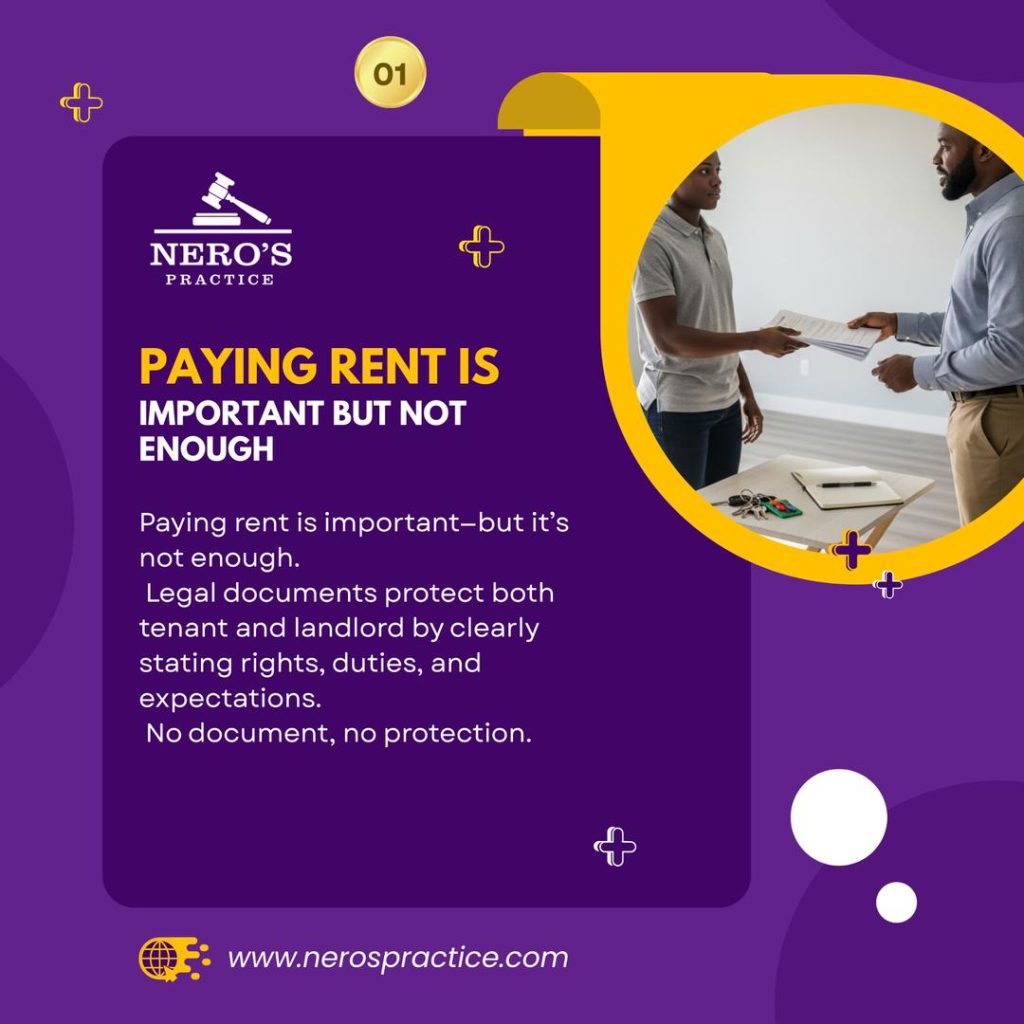
- Paying Rent Is Important, but Not Enough
Paying rent consistently is a basic obligation of every tenant, but it does not automatically guarantee legal protection. Without proper documentation, a tenant may struggle to prove the terms of the tenancy, the agreed rent, or even the duration of stay.
In many disputes, verbal agreements are difficult to enforce. When issues arise such as sudden rent increases or disputes over tenancy terms rent payments alone may not be sufficient to defend your position. Legal documents ensure that your payments are tied to clear, agreed terms. - Your Tenancy Agreement Is Your Shield
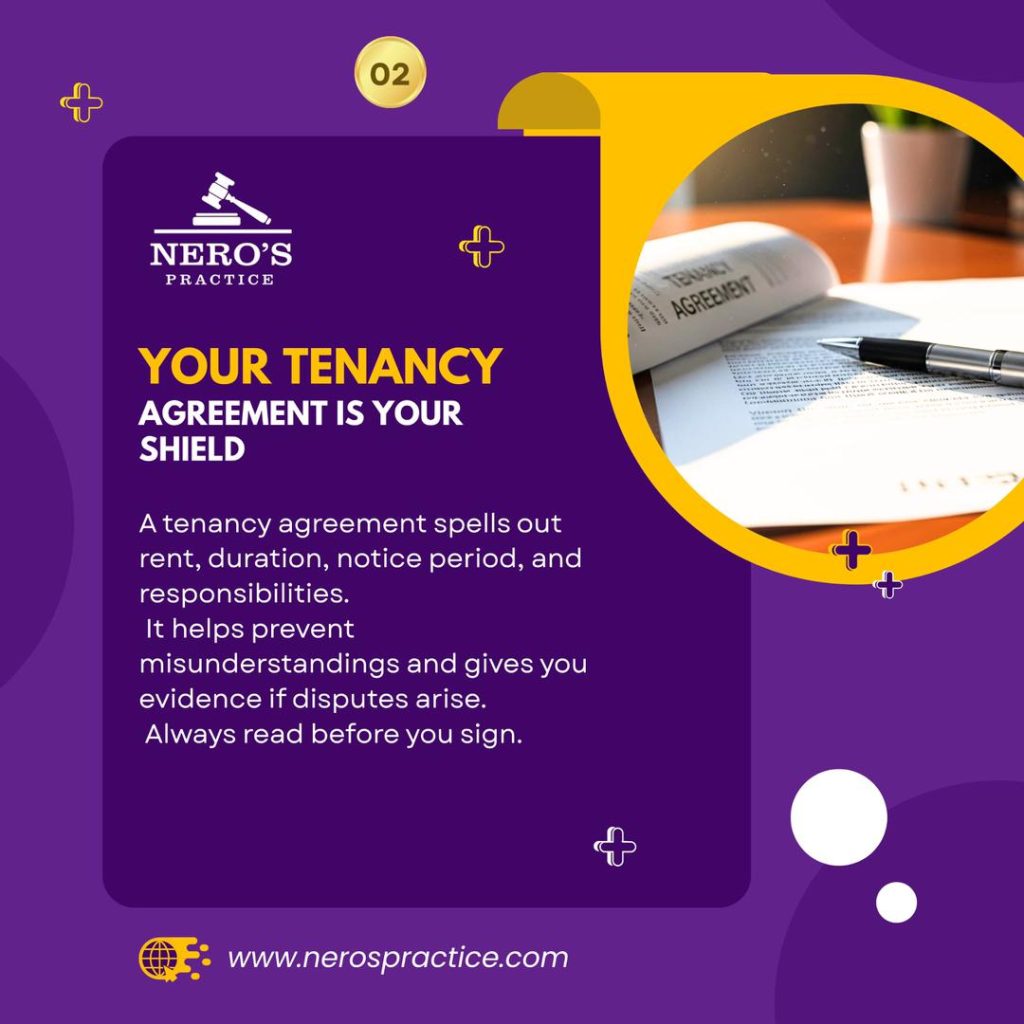
A tenancy agreement is one of the most important documents in any rental arrangement. It clearly outlines the rights and responsibilities of both the landlord and the tenant. This includes rent amount, payment schedule, duration of tenancy, maintenance obligations, notice periods, and conditions for termination.
When properly executed, a tenancy agreement serves as your legal shield. It provides clarity, prevents misunderstandings, and offers legal backing in the event of a dispute. Without it, tenants are often left vulnerable to unfair practices. - Proof of Payment Matters
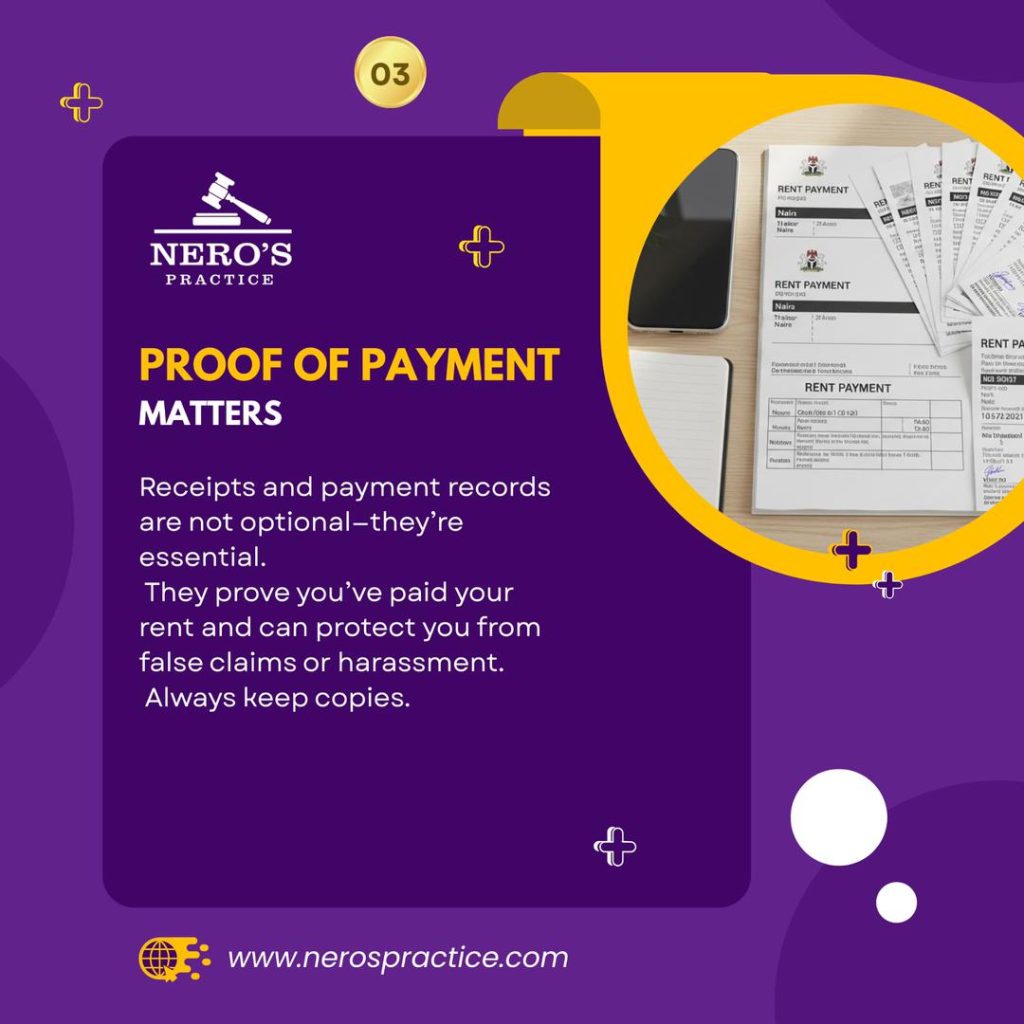
Keeping records of rent payments is just as important as making the payments themselves. Receipts, bank transfer confirmations, or payment acknowledgments serve as evidence that you have fulfilled your financial obligations.
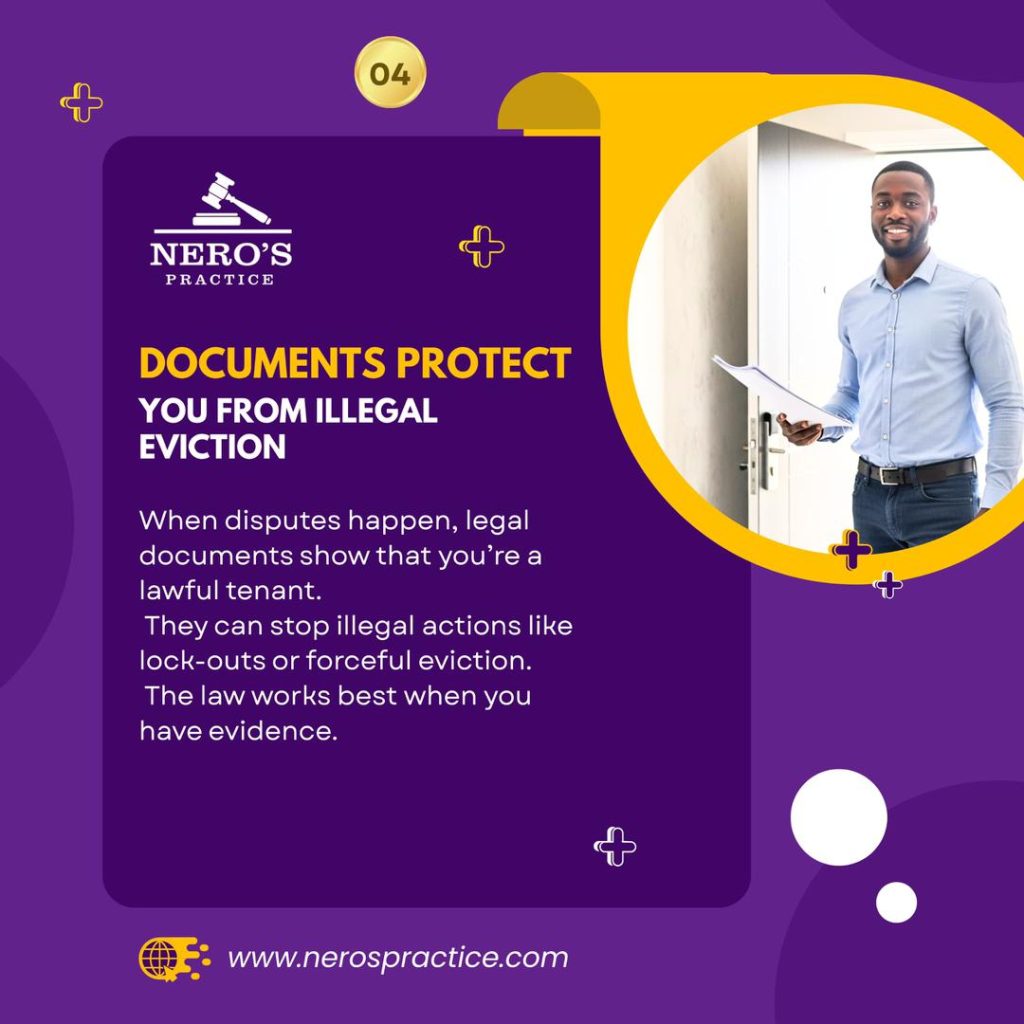
Proof of payment can protect tenants from false claims of rent default and is often required in legal proceedings or negotiations. Always ensure that payments are documented and safely stored. - Documents Protect You from Illegal Eviction
Illegal eviction remains a common issue in many rental situations. Proper legal documents such as a valid tenancy agreement and proof of rent payment offers strong protection against unlawful eviction.
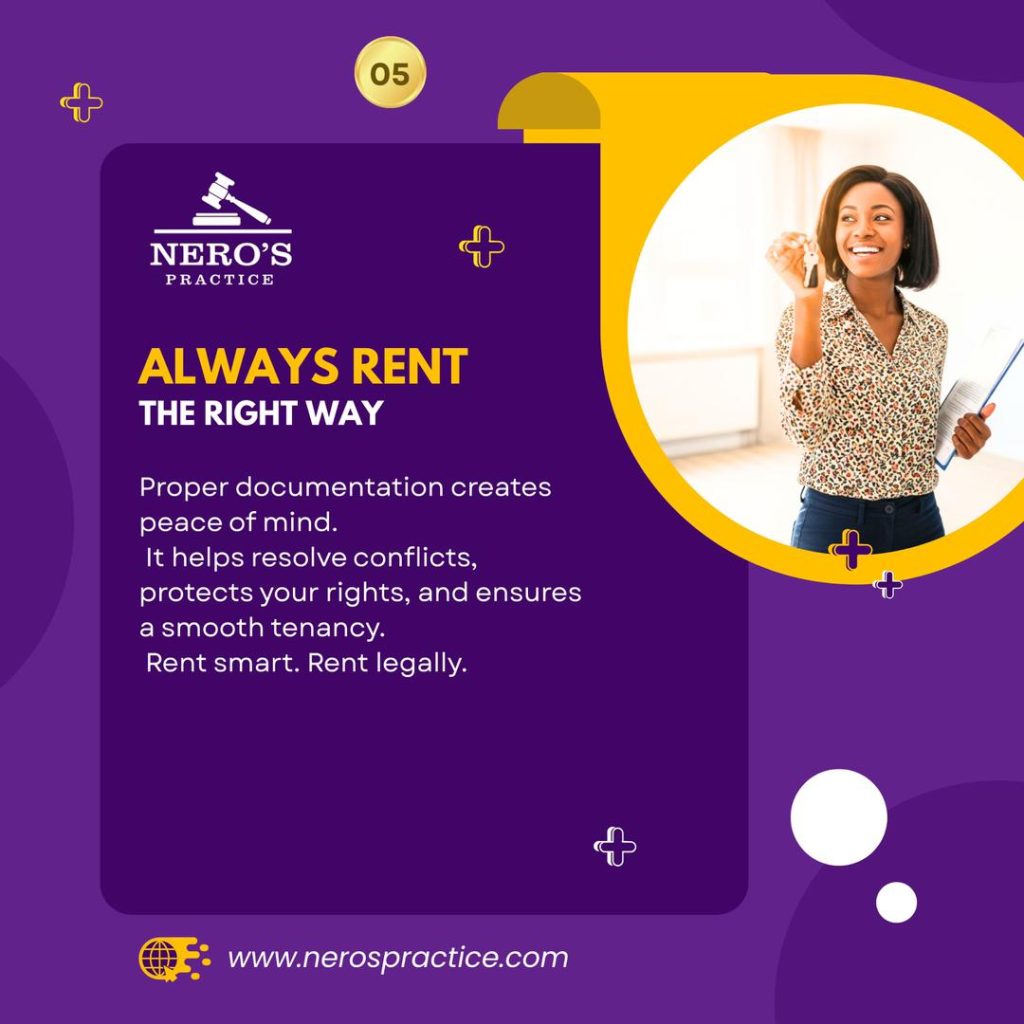
These documents establish your legal right to occupy the property and can be used to challenge eviction attempts that do not follow due process. In many jurisdictions, landlords are required to follow specific legal procedures before evicting a tenant, and documentation is key to enforcing those protections. - Always Rent the Right Way!
Renting the right way means insisting on proper documentation from the start. This includes a written tenancy agreement, clear rent terms, receipts for payments, and any other relevant records. While informal arrangements may seem easier, they often lead to serious complications later.
Taking the right steps protects your peace of mind, your finances, and your legal rights. It also promotes transparency and professionalism in landlord-tenant relationships.
Conclusion
Legal documents are not optional extras when renting a house, they are essential safeguards. Paying rent is important, but documentation is what secures your rights and protects you from disputes, misunderstandings, and illegal actions.