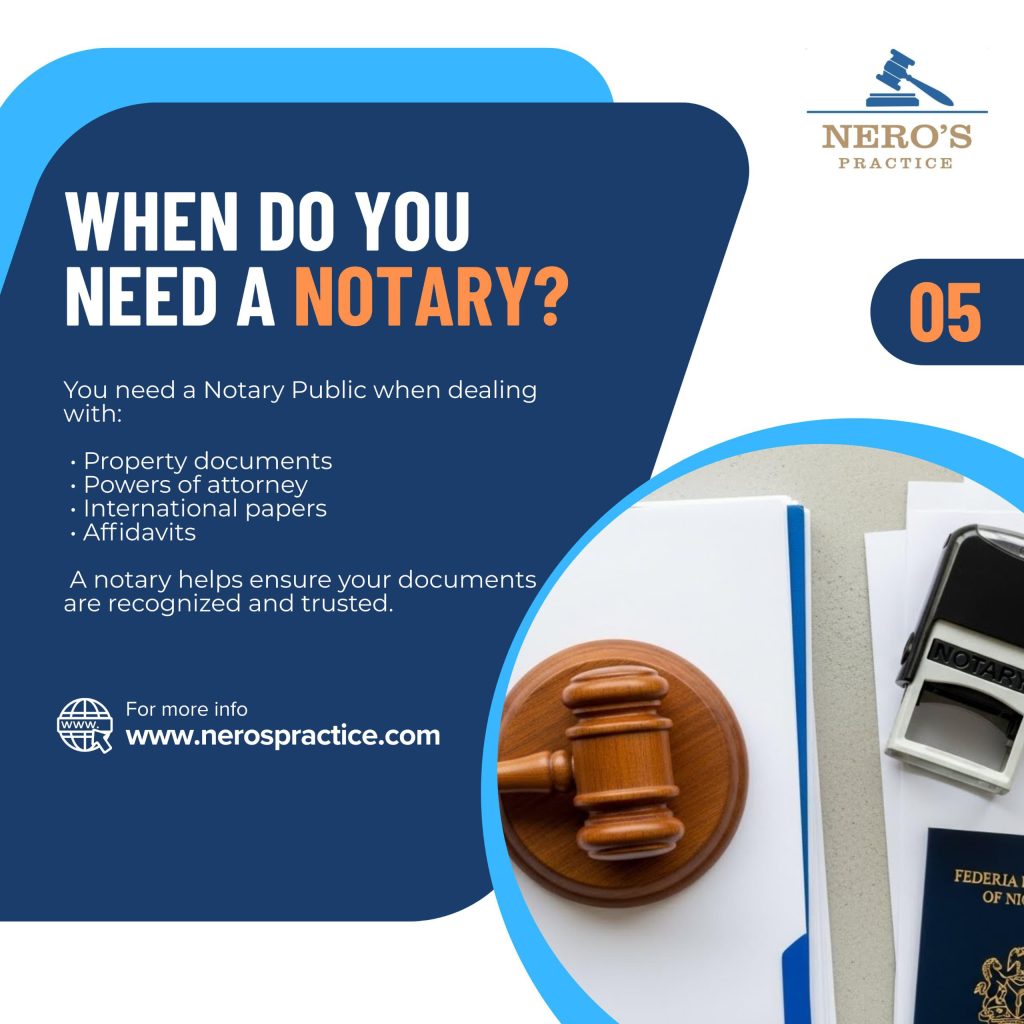
A Notary Public in Nigeria is a legal officer appointed by the Chief Justice of Nigeria to perform specific official and legal functions. Their main role is to authenticate documents and transactions, especially those that will be used outside Nigeria or require a high level of legal credibility.
Below is a clear and simple explanation of what a Notary Public does in Nigeria.
TOP 10 LEGAL DUTIES OF A NOTARY PUBLIC EVERY NIGERIA SHOULD KNOW
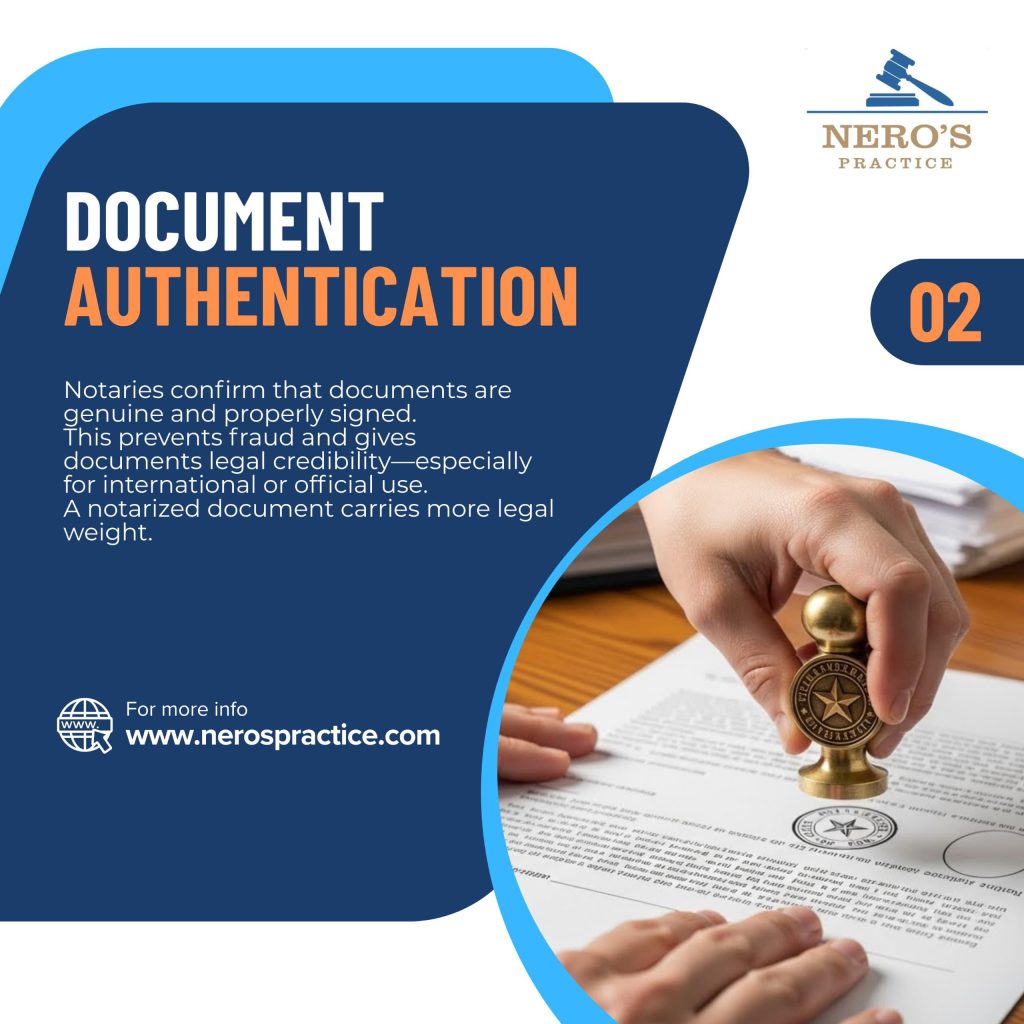
1. Authentication of Legal Documents
A Notary Public certifies that documents are genuine and properly executed. This includes:
- Affidavits
- Declarations
- Power of Attorney
- Contracts and agreements
- Company and property documents
Their seal and signature confirm that the document is legally valid.
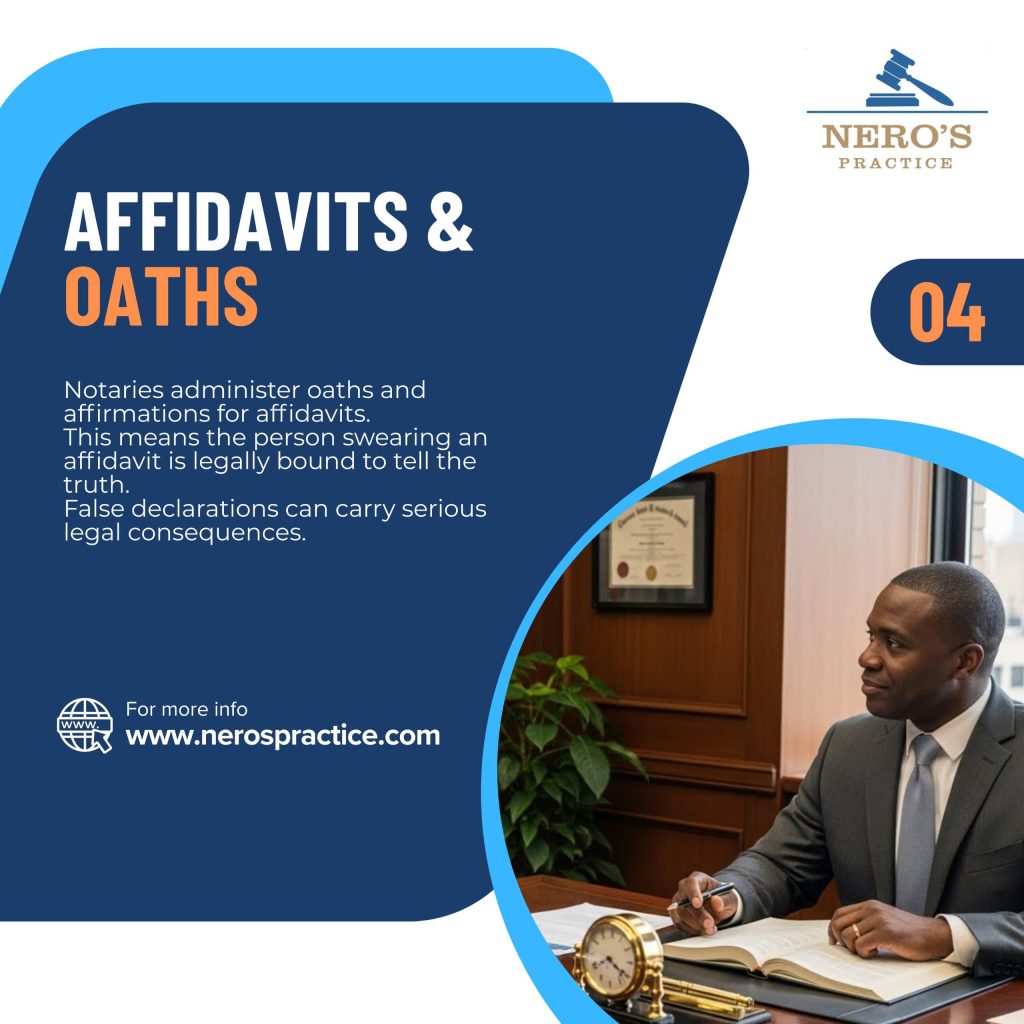
2. Administration of Oaths and Affirmations
Notaries are authorized to:
- Administer oaths
- Take sworn statements
- Witness affidavits
This is often required for court cases, official applications, or international documentation.
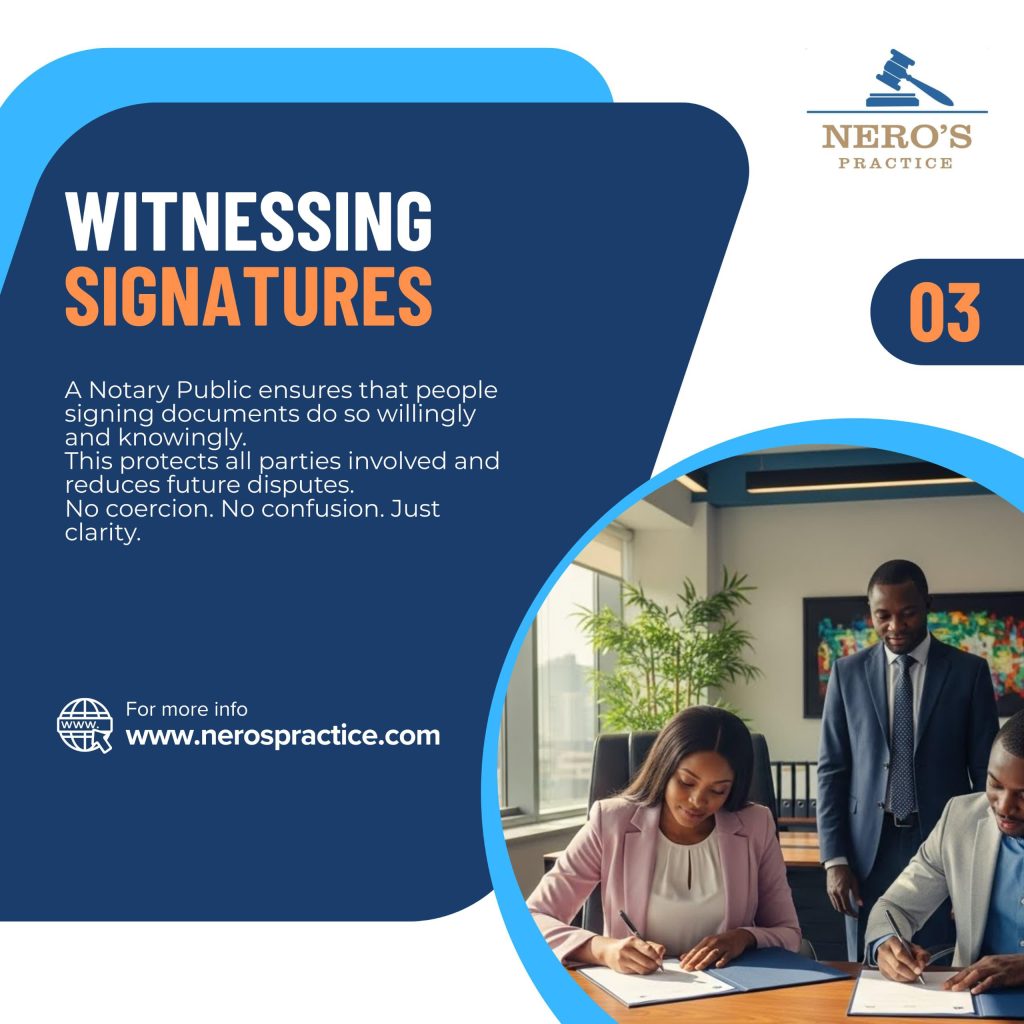
3. Witnessing the Signing of Documents
A Notary Public ensures that:
- The parties signing a document are properly identified
- The signing is done voluntarily
- The signatories understand the content of the document
This helps prevent fraud and future disputes.
4. Certification of True Copies
Notaries certify that photocopies of documents are true and accurate copies of the originals. This is commonly required for:
- Academic records
- Identification documents
- Corporate filings
- Immigration and visa applications
5. Preparation and Notarization of International Documents
Many foreign institutions require notarized documents from Nigeria. A Notary Public prepares and authenticates documents meant for use abroad, such as:
- Business agreements
- Immigration papers
- Educational and professional credentials
6. Protest of Bills of Exchange and Financial Instruments
In commercial transactions, a Notary Public may formally record non-payment or dishonour of financial instruments like cheques and bills of exchange.
7. Legal Credibility and Global Acceptance
Documents notarized in Nigeria carry strong legal weight and are often recognized internationally, especially when further legalized by relevant authorities.
8. Attestation of Powers of Attorney
A Notary Public attests to Powers of Attorney, confirming that the grantor has willingly and legally authorized another person to act on their behalf.
9. Safekeeping of Legal Records
Notaries are responsible for maintaining proper records of notarized documents, including dates, parties involved, and the nature of the transaction, ensuring accountability and traceability.
10. Prevention of Fraud and Legal Disputes
By verifying identities, witnessing signatures, and authenticating documents, a Notary Public helps prevent fraud, impersonation, and future legal disputes.
A Notary Public is not just a witness, but a trusted legal officer whose role strengthens the integrity of documents and transactions in Nigeria.
A Notary Public in Nigeria is a legally appointed officer authorized by the Chief Justice of Nigeria to authenticate documents and perform specific legal functions that give documents credibility and legal recognition. Their role is especially important for documents used in official, commercial, and international matters.
A Notary Public is responsible for verifying identities, witnessing signatures, administering oaths, and certifying documents to ensure they are genuine, properly executed, and legally valid. By notarizing documents such as affidavits, powers of attorney, contracts, and certified true copies, a Notary Public helps protect individuals and organizations from fraud and disputes.
In addition, Notaries play a key role in international transactions, as many foreign institutions require notarized Nigerian documents. They also handle specialized duties such as protesting dishonoured financial instruments and keeping proper records of notarized acts.
Overall, the work of a Notary Public promotes trust, legality, and transparency in both personal and business transactions, making their services essential in Nigeria’s legal system.