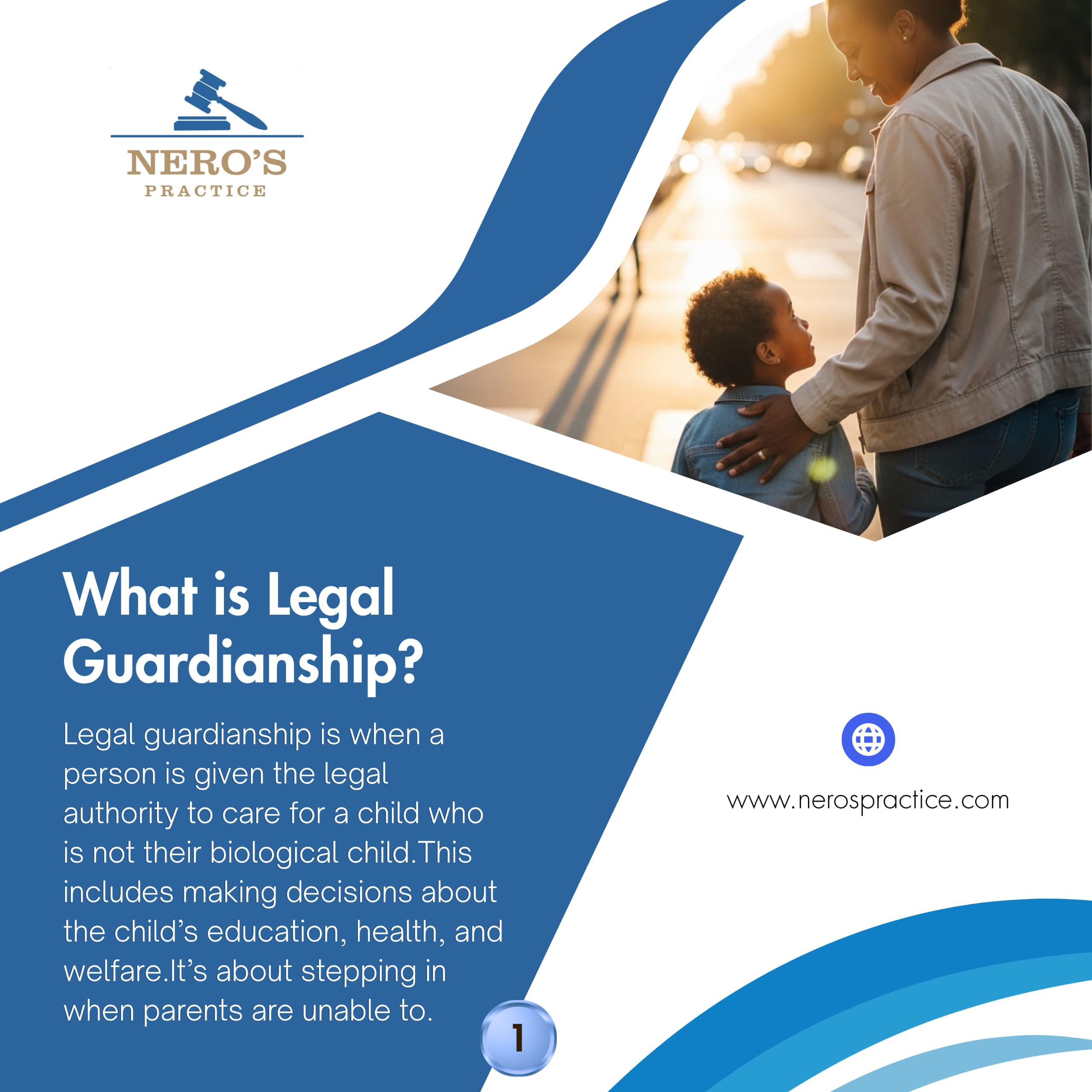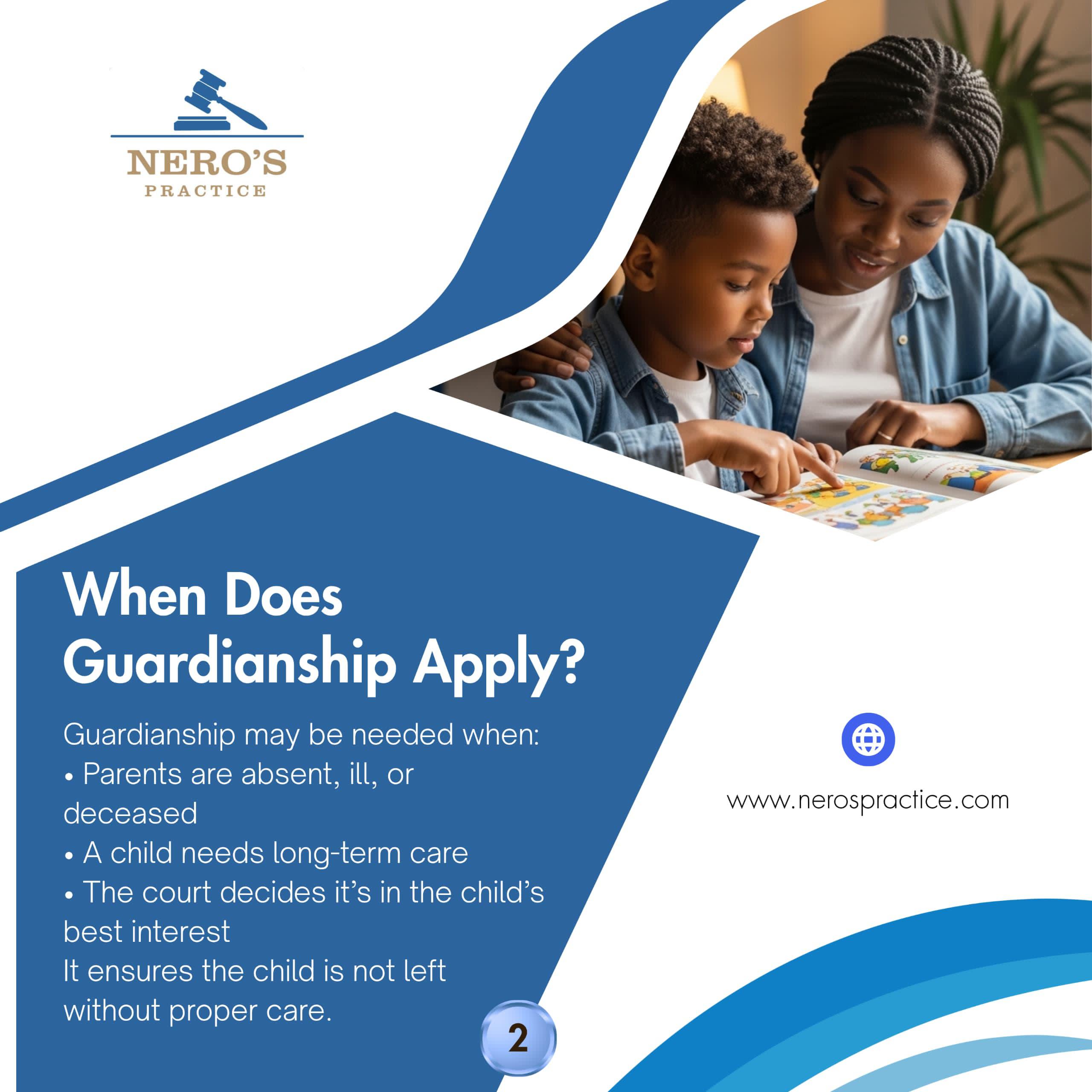
What Is Legal Guardianship? Understanding the Difference Between Custody and Guardianship. When it comes to the care and protection of a child, terms like “custody” and “legal guardianship” are often used interchangeably. However, they have distinct meanings in law, and understanding the difference is crucial, especially when making decisions that affect a child’s well-being and future.What Is Legal Guardianship?Legal guardianship is a court-approved arrangement where an individual (who is not necessarily the biological parent) is granted the legal authority to care for a child. This includes making important decisions about the child’s education, healthcare, and general welfare.Guardianship is typically established when a child’s parents are unable to care for them due to illness, absence, or other circumstances like Both parents are deceased. There is a need for a stable and responsible adult to take over parental duties.A legal guardian acts in the best interest of the child and is accountable to the court for their decisions.
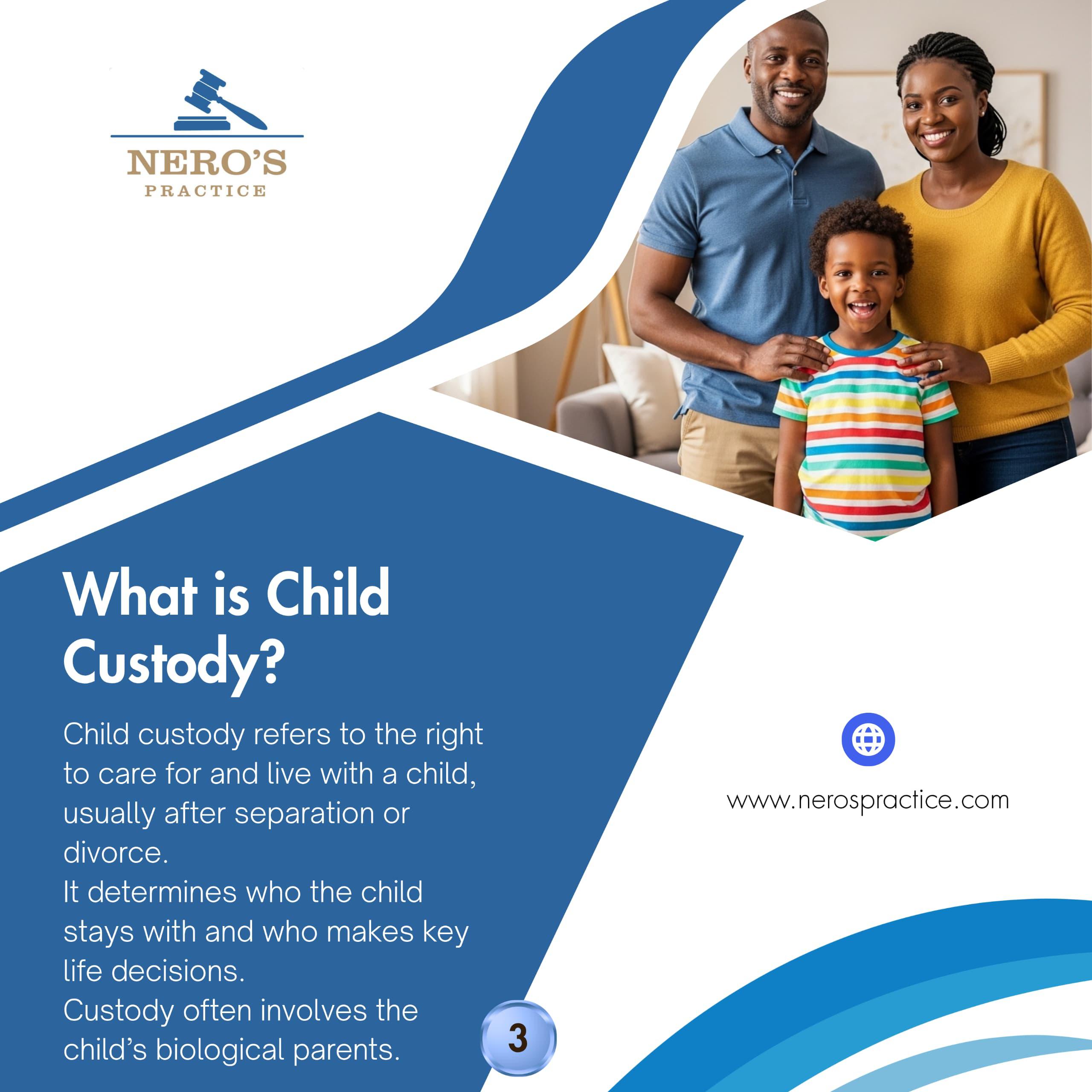
What Is Custody?Custody, on the other hand, usually refers to the legal rights and responsibilities of a child’s biological parents. It determines where the child lives (physical custody), Who makes major decisions about the child’s life (legal custody). Custody arrangements often arise during divorce or separation proceedings, where the court decides what is in the best interest of the child.
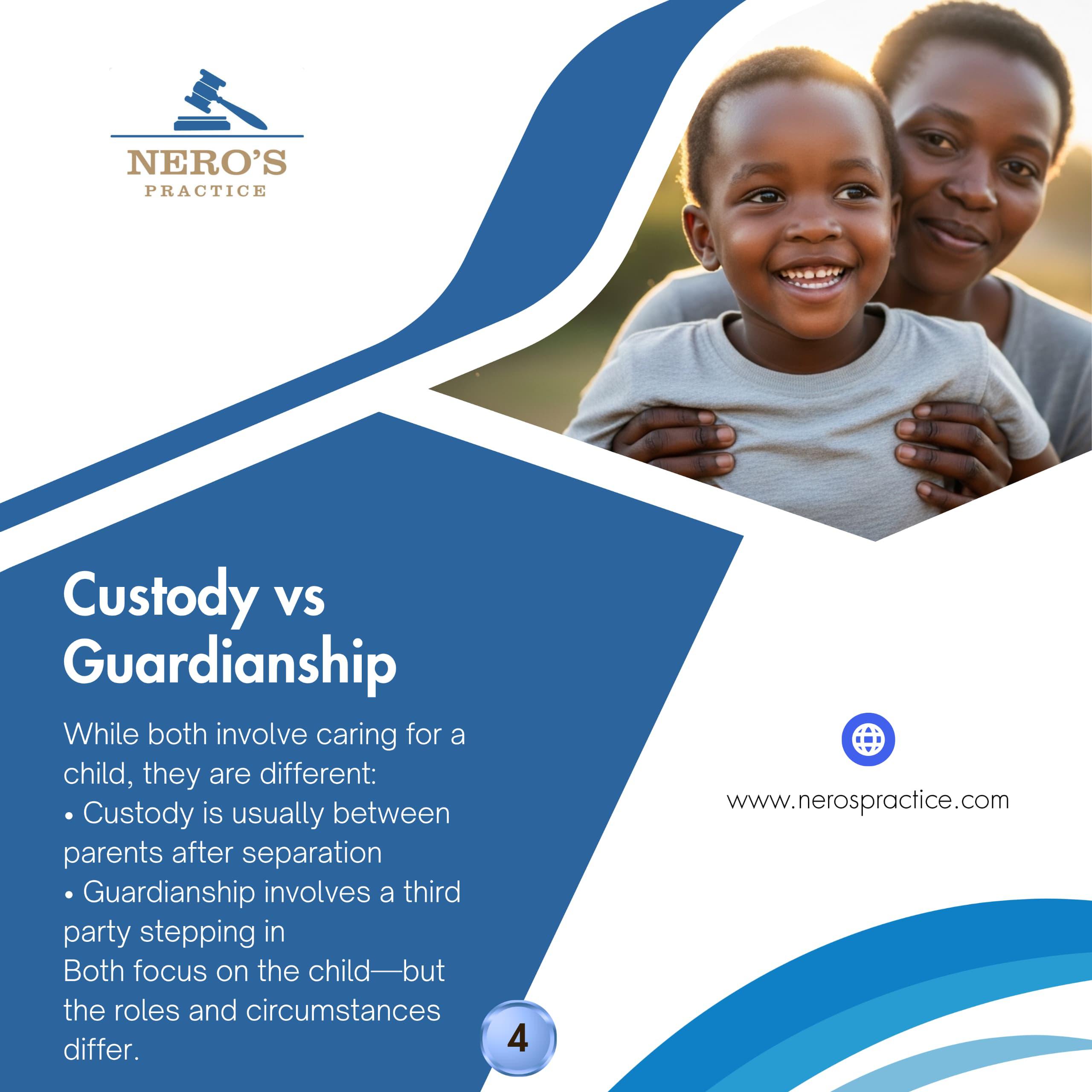
Key Differences Between Custody and Guardianship: While both custody and guardianship involve caring for a child, the key difference lies in “who” is granted that responsibility and under what circumstances like parties Involved. Custody is typically granted to biological parents, while guardianship can be granted to a third party.
Legal Process: Guardianship requires a formal court process to appoint someone as a guardian, whereas custody is often determined during family-related legal proceedings like divorce.
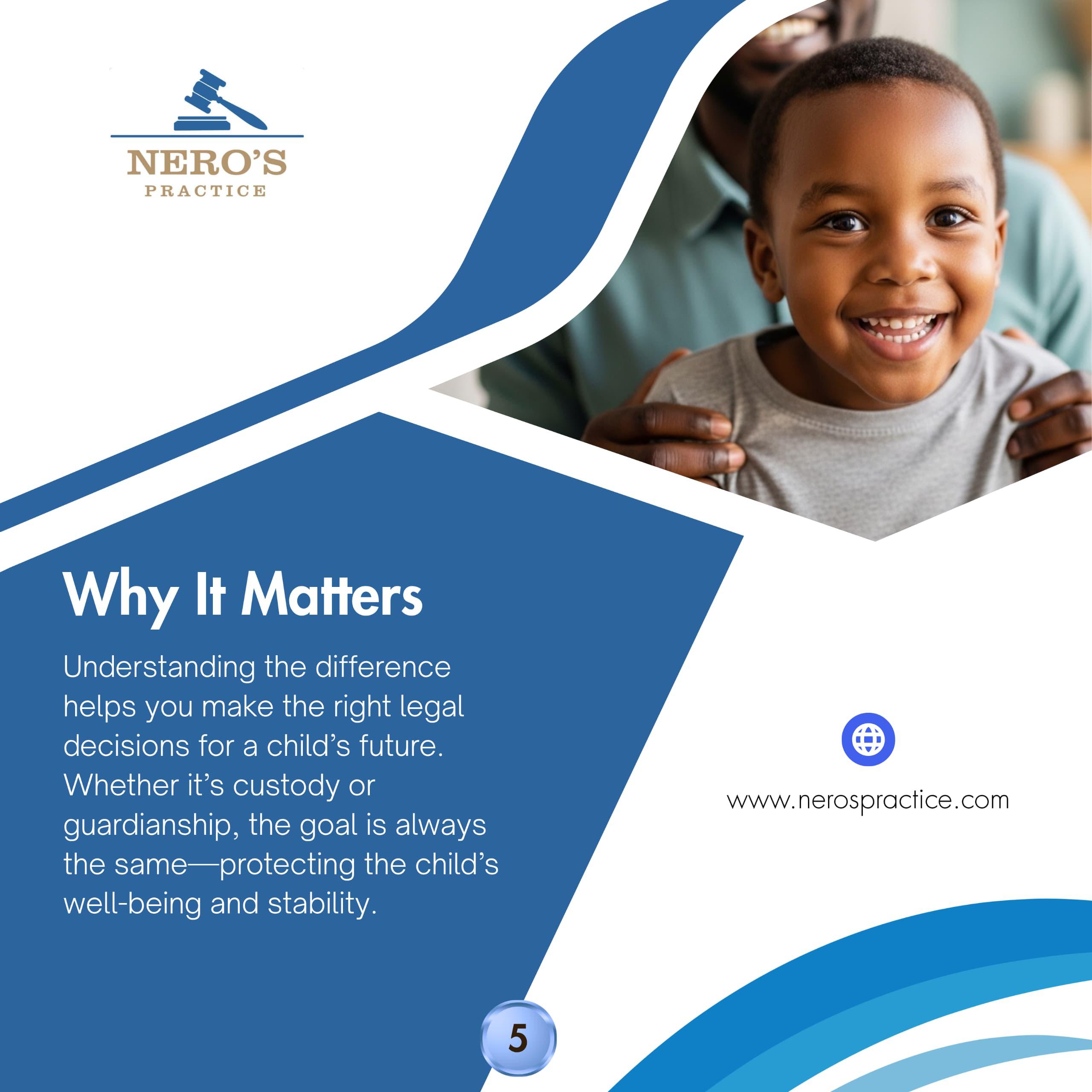
Scope of Authority:Guardians often have broader responsibilities, especially when parents are absent or unable to fulfill their roles. Why This Matters; Understanding these distinctions helps individuals and families make informed decisions about a child’s future. Whether you are a parent going through a separation or a relative stepping in to support a child, knowing your legal position is essential.
How We Can Help; We specialize in guiding individuals and families through sensitive legal matters with professionalism and care. Our team is committed to helping you understand your options and take the right steps to secure the best outcome for the child involved.If you need legal advice or assistance regarding custody or guardianship, don’t hesitate to reach out.
Visit us:[www.nerospractice.com](http://www.nerospractice.com)
Office Address:24, Raymond Njoku Street, South West Ikoyi, Lagos
Your child’s future deserves clarity, protection, and the right legal support.